
Composite Bonding with Permabond Epoxies
- GlueOnline
- Permabond at GlueOnline
- 4 Mar 2026 views
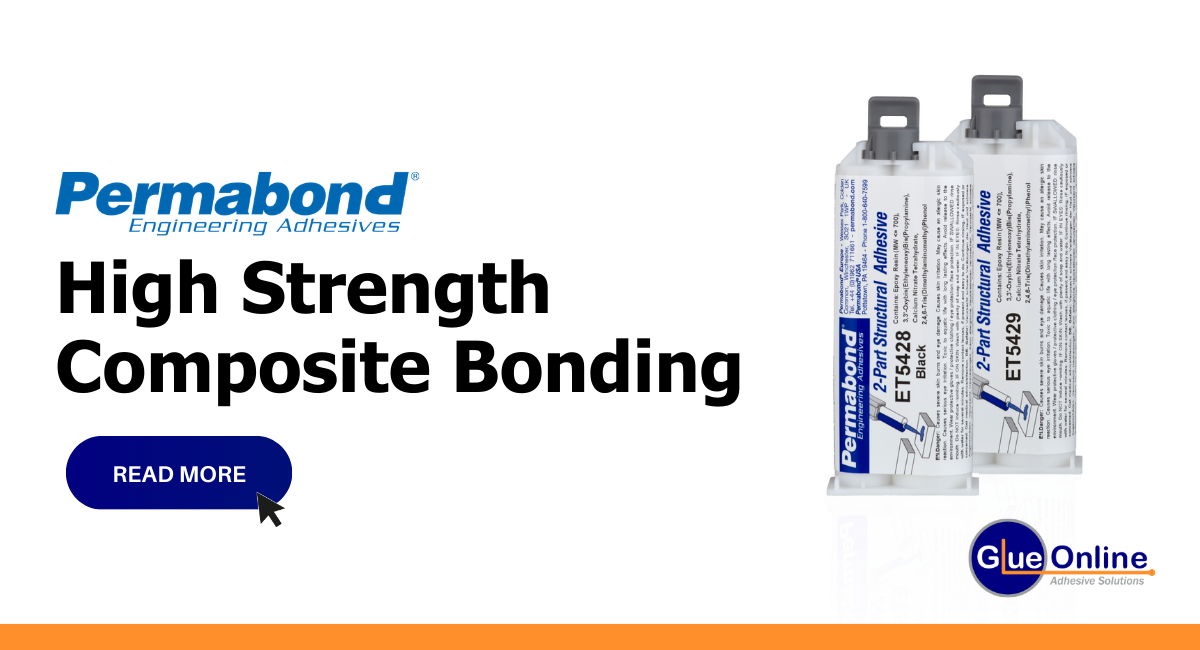
To ensure high strength reliable composite bonding, epoxy adhesives are the perfect solution, but why, and what options are available?
What are composite materials?
Composites are engineered materials which consist of two or more distinct materials, usually a reinforcement and base. They are popular due to their low weight and tend to have increased strength, durability and flexibility. Some examples of composite materials include carbon fibre, fibre reinforced plastics (FRP), and glass reinforced plastics (GRP).
Why use adhesives to bond composite materials?
As composite materials are used across industries from automotive, to aerospace and marine they often face dynamic loads, vibration, elevated temperatures, gap variations, moisture ingress and more, making bonding and attachment important to their durability. For example, applications such as lightweight composite panels in cars and mast bonding on boats, moisture resistance and vibration resistance are key.
Mechanical fastenings and welding can damage the material due to force and high temperatures and will ultimately add weight to a lightweight material.
Instead, using adhesives can help with:
- Load distribution
- Shock absorption
- Reduced risk of corrosion
- Moisture and chemical resistance
- Improved aesthetics
- The ability to bond dissimilar materials
For a strong, lightweight and aesthetically finished product, adhesives are recommended, with epoxies being the most used for their strength and durability.
High strength composite adhesives: Permabond epoxies ET5428 & ET5429
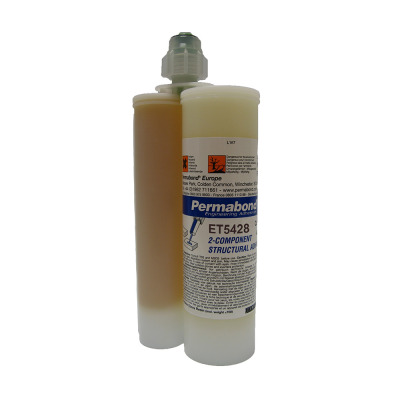
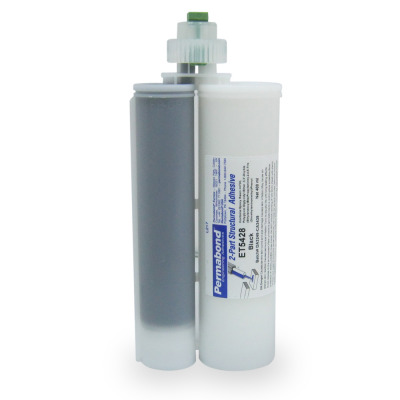
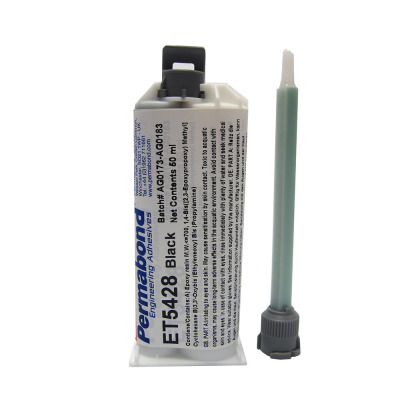
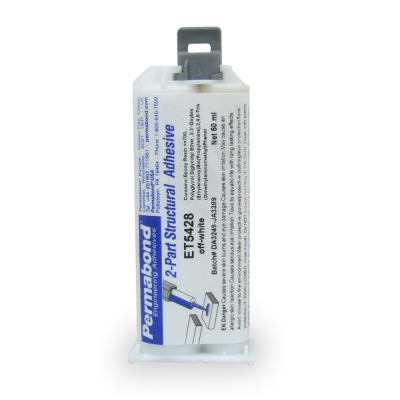
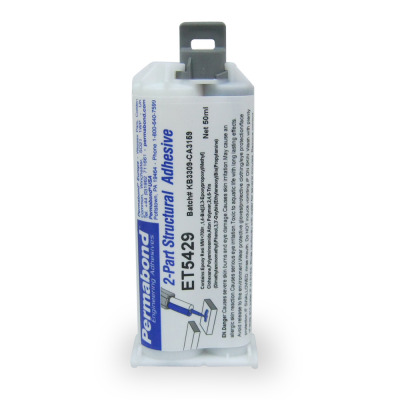
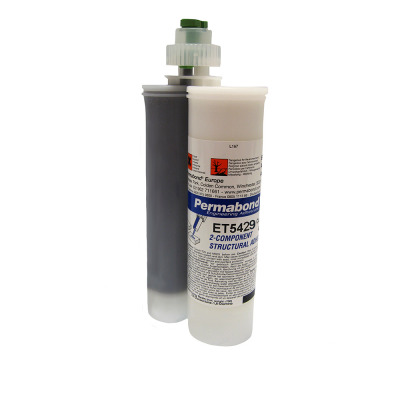
Permabond two-part epoxy adhesives ET5428 & ET5429 are formulated to seamlessly bond composite materials to a high strength.
Both adhesives are lightly thixotropic and provide excellent shear, peel and impact resistance, making them ideal for use in demanding assemblies. They also excel at bonding a variety of substrates like metal, plastics, woods, ceramics and even nylon.
The biggest difference between these adhesives is in their curing speed. ET5428 cures quickly, reaching handling strength at room temperature in 30-45 minutes while ET5429 offers a long open time, reaching handling strength at room temperature between 6 - 10 hours.
Lastly, ET5428 is available in both cream and black, making it suitable for colour matching to composite materials. While ET5429 is only available in charcoal, which matches carbon fibre well.
Key features of ET5428 & ET5429:
- Lightly thixotropic, with excellent flow control
- Excellent on composites, metals and plastics
- Outstanding sheer & peel resistance
- Great environmental, vibration and impact resistance
- Easy to dispense by hand
- ET5428 offers fast handling strength and colour options
- ET5429 offers a long open time
- Good heat resistance for epoxies, withstanding up to 120°C
Best practice for bonding carbon fibre and similar materials:
When bonding more specialised materials, it’s not just about choosing the right adhesive but also in the surface preparation. In order to get the best possible bond:
- Start by degreasing the surface by wiping it down with acetone or isopropanol to remove any oils.
- Abrade the surface using sandpaper or abrasive pads to roughen the bonding surface.
- Clean again to wipe away dust residue from the abrasion.
- Ensure the surface is fully dry then apply the adhesive.
Related Posts

Related Products
Recent Posts


 RSS Feed